
NEWSLETTER · ISSUE 21
Leave a clear way back to paused work
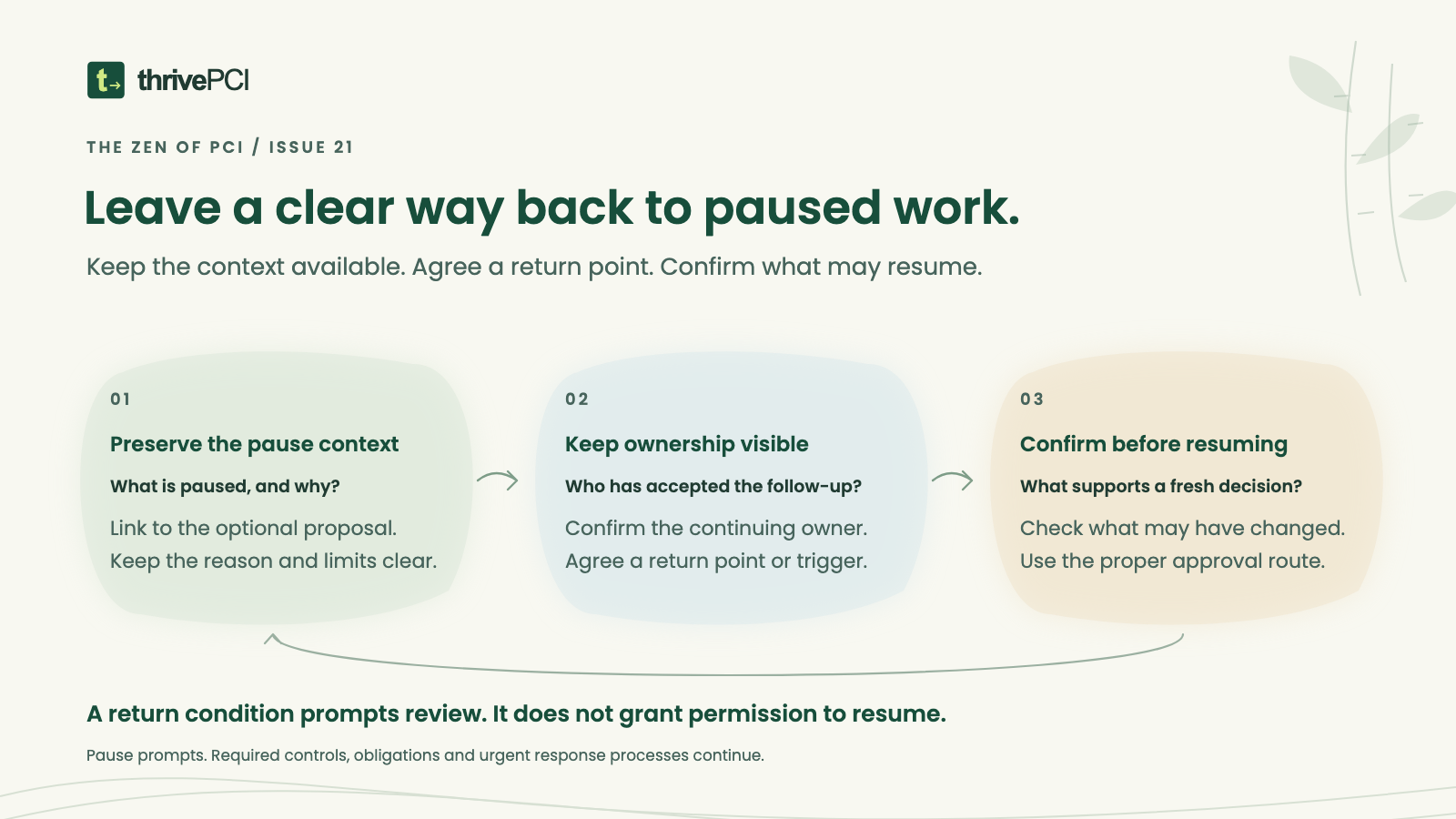
A deliberate pause can protect a useful idea while the team gathers the context needed to continue it. The practical challenge is leaving a clear way back. Someone returning later should understand what was paused, why it stopped, who is keeping the question visible, and what decision would support another step.
Without that context, paused work can become a puzzle. A participant sees an old task and assumes it is ready. Another remembers a concern but cannot find its reference. A return date arrives while the condition that mattered remains unresolved. A short, accurate pause note can make the next conversation easier.
In our fictional supplier-integration exercise, the placeholder handoff helped a participant identify the next question but did not make the responsible role clear. Suppose the appropriate owner decides to pause the optional proposed wording trial while the responsibility boundary is clarified through the proper route. This invented pause concerns that proposal alone.
The contributor-capacity question and pending live integration decision remain separate. Required controls, obligations, deadlines, and urgent response processes continue. Keeping those positions visible gives the pause a precise meaning rather than letting it become a general instruction to stop work.
Preserve the pause context
Start with the actual proposal and its current position. Identify the wording version, fictional setting, and question that prompted the pause. Preserve the mixed result: the next question was found; its responsible role was not. Keep a possible explanation distinct from what the check established.
Then identify what would make returning worthwhile. A clarification of the responsibility boundary might provide relevant context. An agreed return point can bring the question back to attention even if that clarification has not arrived. Neither event automatically establishes permission to resume the trial.
The aim is a usable handover to a future conversation, including one held by someone who was not present when the pause began.
Leave a pause note people can use
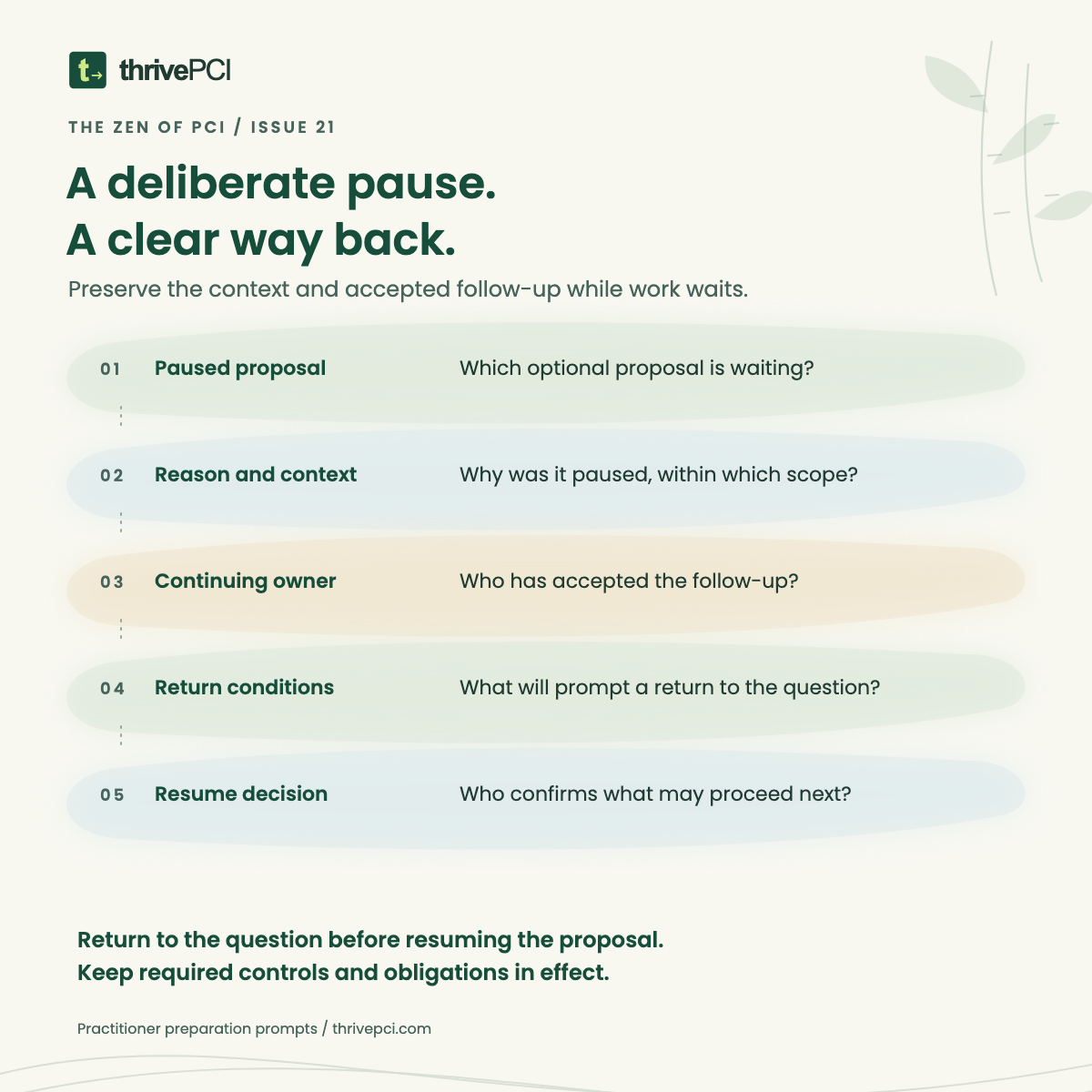
Use five prompts to keep the paused proposal understandable and its return deliberate:
Paused proposal: Identify the optional activity that is paused and its relevant version or work reference. State its current scope and position. Keep other tasks and decisions distinct so another person can see precisely which proposal the pause concerns.
Reason and context: Describe the question behind the pause and the observation that supports it. Link to the authorized reference instead of copying underlying evidence into a coordination note. Include the context the receiving person needs and is permitted to use, along with the limits of the earlier check.
Continuing owner: Confirm who has accepted responsibility for keeping this paused question visible through the normal working route. Identify contributions or decisions that remain with other roles. Receiving the note does not itself establish acceptance, capacity, or authority to decide whether the proposal may resume.
Return conditions: Agree the relevant trigger or return point and what should be reviewed then. State what remains unconfirmed. A reminder can prompt a conversation; it does not satisfy a prerequisite. If the expected context has not arrived, preserve that position and use the appropriate clarification or escalation route.
Resume decision: Identify the authorized role that will consider the proposal's current position before any restart. Recheck relevant participants, wording, conditions, dependencies, and approvals. The appropriate outcome could be a further pause, a revised proposal, closure without proceeding, or a supported next action within an authorized scope.
These prompts accompany the existing approval, change, evidence-handling, assessment, and operating processes. They introduce no PCI activity interval or altered deadline. A pause of an optional proposal never suspends required controls or delays prescribed urgent response.
Confirm before resuming
When the agreed return point arrives, begin with what has changed. The responsibility clarification may be available while the proposed wording has become outdated. A participant may have changed roles. New context can make the earlier plan less relevant or reveal a different question that needs attention.
The continuing owner can assemble the current position for the proper decision role. That coordination helps the decision without making it. A received clarification, a reminder, and a fresh authorization are separate events; record the supported position through the normal route.
Try leaving a clear way back
Use invented role names and the fictional paused wording trial. Write the five prompts. Give a partner a return reminder while leaving one condition unresolved. Ask what they can establish, who owns the next decision, and what remains proposed.
Use no real evidence or sensitive details. Revise any phrase that turns the return date into automatic permission. A useful pause note keeps context available, ownership accepted, and the next step grounded in the current position.
Explore the free Program Maintenance guide (opens in a new tab)